In Between Science & Faith Was my Mother
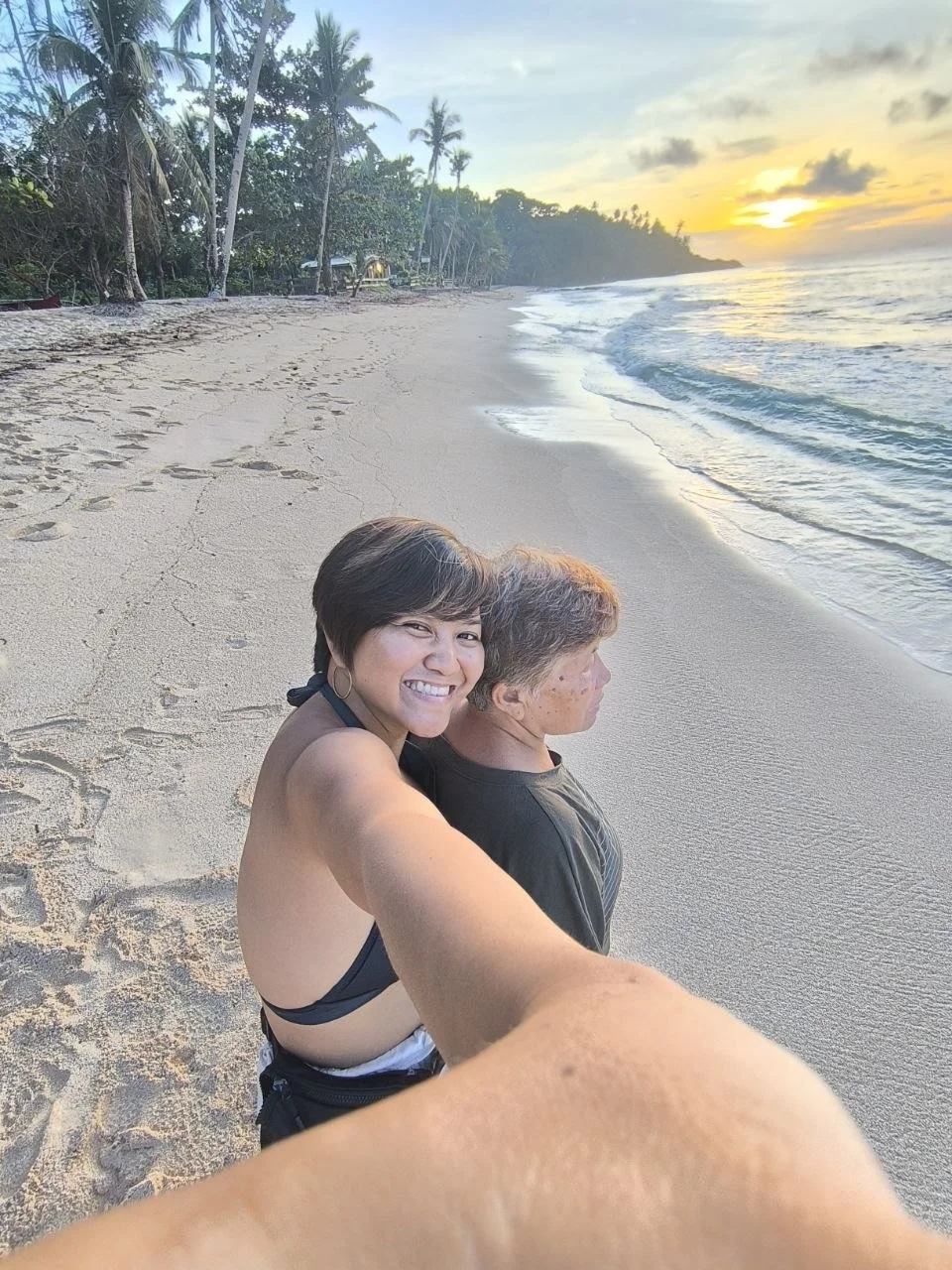
My staff told me I was mumbling “Mama” as I fought hard for my life on the hospital bed.
My mom and I used to argue about science and faith (among other things) like these two beliefs would cancel each other out when they are mentioned in one sentence. I always end up saying “Let’s agree to disagree!” after realizing we couldn’t convince each other to get on one side even if we try. It’s not that I don’t recognize God. In fact, I’d always claim that I’m spiritual but not religious- believing in higher power but rejecting the unnecessary & questionable rituals. But also, I strongly believed I was 90% in control.
Few days after getting discharged from the hospital, I finally had the strength to call my mom and say I’m more than ok! I said with pride that I got saved by science. I got the right medications at the right time, good doctor, strong heart & brain from doing a lot of surfing and running, healthy liver & lungs because I rarely drink nor smoke. My body fought for me and I took full credit for that. The doctor who saved me in St. Paul Hospital (Dr, Fuertes) confirmed that if those organs were already damaged, I could have seen Jesus earlier. (haha)
My mom responded with conviction, “Alam mo kung anong nag save sayo? Yung dasal namin.” [You know what really saved you? Our prayers and faith.”.] At that moment, I felt like she was dismissing the work I’ve done for thirty five years taking care of my body. And that really annoyed me.
After I woke up from the hospital, people filled me in with their own stories on what they were doing when they heard the news that I was rushed to the hospital. Staff were working, some were in a boat party, and others were doing their usual island errands. Every person told the story differently, but one detail remained the same— there was nothing left for them to do so they prayed.
They confessed that most of them didn’t even know how to pray. But in their clumsiest words, they talked to God/Creator/Higher Being, the Universe on my behalf during those three days between life and death. Each person expressed their faith differently—through whispered prayers, novenas, church services, silent tears, or quiet conversations with God.
Sinag staff was praying together for three days. Ate Nancy & Evelyn, our beloved housekeepers, told me they would stop by the catholic church in General Luna to intentionally pray. Island friends talked to their own churches for prayer requests regardless of religion or belief, and passed it on to their families. Mothers of friends offered their devotions through rosary— some of them I haven’t met yet. A close friend of mine told me her mother did a nine-hour novena until I wake up. My mom sent countless of messages to many relatives to pray for me. And some friends who don’t believe in Jesus or God just thought it would be nice if I’d make it through, and strongly believed I would.
For me, it only felt like an hour of dream.
But you know when people say dead people saw the light before dying? I actually did.
In this dream, I found myself looking at a crystal-clear ocean, watching the light from the sunrise scatter and dance on the water. I remembered feeling so much lightness, just before I opened my eyes and realized I am in the hospital.
On my first check-up back to my treating doctor in Surigao, two weeks after getting discharged, he greeted me “Hello, Miracle Girl!” as I entered his clinic. I was still groggy, mostly from my meds, and confused about what happened. All I know is I want answers!
I thought a man of logic could explain better how I survived this whole ordeal. And I can’t wait to get back to my mom and tell her… “I told you so. It’s me and science!”
I expect a no-BS-this-is-what-happened diagnosis. He started by saying, “Suzette, a blood acidity pH of 6.6 is no longer compatible with life.” I was stunned, just from him calling me on my real name like how my mom does, and the fact that he is letting me know I was very very close to death.
Diabetic ketoacidosis (DKA) is a medical emergency that occurs when the body runs out of insulin. Unable to use sugar for energy, it begins burning fat instead, producing acids called ketones. When too many ketones build up, the blood becomes dangerously acidic, and the body starts to shut down. Severe DKA is when acidity falls under 7.0, way below the tightly regulated acidity of 7.25-7.29. These results to severely reduced consciousness or worse, comatose.
He admitted that he wasn’t quite sure back then whether I’d live or die just basing it off on the initial ABG (Arterial Blood Gas) results. But when he saw me lying there, he believed I will live.
I was dead according to science.
At this point, I was already sobbing uncontrollably. I guess from all the restlessness and medicine overwhelming me at the same time.
He praised how strong my will is to live which I wasn’t aware of since I was basically unconscious the whole time. But my ego wanted a recognition that my organs and mindset were prepared to keep me alive because of… me.
I was half-smiling throughout the conversation, praising myself quietly.
Before leaving, I thanked him for saving my life.
He never once mentioned about how good he is as an endocrinologist or the hospital’s advanced facilities, then spoke the words I wasn’t expecting—
“I wish I was the one who saved you, but it’s God. I’m just a tool.”
Science does not deny faith.
If I had heard those words under different circumstances, I probably would have cringed.
But instead, I walked away with a quiet question in my head, “Who actually decides who lives or dies?”
Over the following weeks, I immersed myself in learning everything I could about my condition. I spoke with nutritionists, physicians, and trusted healthcare professionals to understand what had happened to my body, how diabetic ketoacidosis (DKA) develops, what recovery would look like, and what is next.
Autoimmune diabetes (LADA or Latent Autoimmune Diabetes on Adults) is a form of diabetes in which the immune system slowly destroys the insulin-producing cells in the pancreas. Unlike type 2 diabetes, it is caused by an autoimmune process and usually requires insulin over time. It is also known as Type 1.5 diabetes.
I wanted answers. And science gave me many of them. That kept me busy and worried, and… restless.
I braced myself for a long battle ahead.
For almost a month, I have never slept a single wink during night time. For the first time in my life, I have experienced panic attacks— heart-pounding and gut-wrenching that won’t stop for minutes. I was prescribed with a medicine called Quetiapine in case I don’t “overcome” it.
Quetiapine is a medication that helps regulate brain chemicals involved in mood, thinking, and sleep. Although it’s mainly prescribed for conditions like bipolar disorder and schizophrenia, doctors sometimes use low doses to help people struggling with severe anxiety or insomnia.
Because of the fear that it will develop to PTSD (Post-Traumatic Stress Disorder), I reached out to my trusted mentor from NLP (NeuroLinguistics Programming) Manila, Sir Noel Silan, a psychologist & psychotherapist, to properly process what I’ve been going through. Coincidentally, Sir Noel appeared multiple times in my dreams that also prompted me to seek help from him.
I knew something had changed in my body. I knew what I was carrying. I had spent years coaching people through difficult seasons and understood many of the tools that help us cope with pain and uncertainty. But even with all that knowledge and experience, the heaviness didn’t go away.
I know this sounds strange but I began noticing what felt like perfect timing everywhere. The right words would find me exactly when I needed them— mostly from texts and people. From random messages I received, the books I was reading, to conversations with people I meet, I was comforted with words that felt divine, to say the least.
I remember Sir Noel validating this in one of the questions as he asks…
“Do you see God now in people?”
At the time, I was also experiencing episodes of derealization—a well-documented phenomenon that can happen after severe trauma or critical illness. I ended up questioning my own reality and whether I actually exist. The delusion even went further to a thought that I am already an angel. :D (lol)
Derealization happens when the brain becomes overwhelmed. To protect itself, it temporarily makes the world feel distant or dreamlike, giving your mind a chance to recover from intense stress or trauma.
But there was something else I couldn’t explain.
Whether it was coincidence, heightened awareness, or something deeper, I found myself seeing or feeling God in ordinary moments.
And that frightened me almost as much as it comforted me.
As we reflected on everything that had happened, Sir Noel quietly put into words what I had been denying and struggling to make sense of myself.
“You’re starting your spiritual journey. So why hurry?”
I was comforted by the fact that Sir Noel was the perfect human to guide me on this process as he himself has experienced medical emergencies (heart complications) that brought him closer to death. But also, closer to the spirit, recognizing that there is something beyond us that governs the universe.
—
So far, two of the people whose opinion I value —both men of science, my doctor and Sir Noel—reminded me of something I had overlooked: science does not deny faith.
If anything, the deeper they understood the human body, the more room they seemed to make for wonder, humility, and the possibility that some things can not be explained by knowledge alone.
Faith does not deny science.
You think I’d stop there, but my thirst for answers only grew bigger.
So I gave in to the curiosity of finding my own truth.
I enrolled in an Applied Neuroscience bootcamp led by a neuroscientist from Standford, Dr. Sarah McKay, hoping to better understand how autoimmune diseases affect the brain and my nervous system. I was so excited to nerd out but it only affirmed a truth I had only begun to discover: healing is not solely a matter of science. It is not just facts.
During one discussion on memory, I asked my professor what she thought had happened to my brain. I couldn’t remember anything from the three days I spent in the ICU! Even though I had been responsive, I was completely unaware and completely forgot everything. I was expecting an explanation that will put end to these questions in my head.
But her response surprised and somewhat disappointed me.
“I don’t know.”
She walked me briefly through several possible explanations before concluding that even the world’s leading neuroscientists still don’t fully understand the human brain.
I stopped myself from judging her, as I get reminded that expertise doesn’t come from knowing it all. In fact, it is the other way around. Those words were not a sign of ignorance. They were an honest acknowledgment of the limits of human knowledge. From someone whose life’s work was to study the brain, admitting this was truly humbling. I mean… What do I know better?
From that day on, every time an image of the brain appeared on the screen as she explains how its countless regions worked together in astonishing harmony, I found myself feeling overwhelmed, but mostly in awe of how God designed the brain so… beautifully.
As a mindset coach with a new found knowledge, I walked away from that bootcamp thinking… “In honor of the synapses and neurons that fired together in harmony to change the way I think, I knew something in my brain switched.”
—
During my recovery, my mom flew to Siargao to take care of me, spending holidays on the island for the first time, when I would usually fly back home to Isabela and spend holidays there.
One morning, to her surprise, I asked if I can pray out loud with her and for her. I had no idea what I was doing. She just cried and listened. She didn’t judge how I prayed.
The words were not perfect but it came naturally, as though they had always been there, waiting to be spoken.
I couldn’t remember the exact words but it was a prayer full of surrender, which didn’t make sense to me before I almost died. It was a declaration that my life doesn’t belong to me anymore, which made my mom bawl hard. In fact, she didn’t talk to me for half a day, probably from shock.
I’m sure she once prayed that I’d be closer to God. But maybe not this close (haha) to confidently and comfortably talk about death.
I told her that every time I revisit my story, I was certain that every little detail of that day were orchestrated so I can live. And on the day I will die again, it will be the same.
In that moment, I thought, how cool it is to find my way back—to pray for the people I love which I have never done before. But also to feel a deeper sense of connection to life.
It took almost a tragedy, but even that made me realize that my mom and I were never really on opposing sides.
My mom would often tease me, “Wag masyadong matalino.” [Don’t be too smart.] But science empowered me to take control of my health. Knowing brought me comfort. Because for most of my life, I had relied on knowledge to survive.
She, on the other hand, never had the opportunity to get a higher educcation but remained curious. Instead, she leaned on something I didn’t fully understand at the time—an unwavering faith. And now, I became her answered prayer.
Between the two of us, I now believed she’s the wiser one.
When I was physically limited to move myself, I relied heavily on every single thing outside of my control— prayers, timing, weather, my doctors, strength of the people around me, and maybe, the quiet belief that I can make it.
In the middle of finding the reason as to why it all happened, science pushes me to figure it all out while faith taught me to let it go.
And you know what I actually found?
A quiet reassurance that I will fully live even if I don’t have all the answers.
From knowing I can’t know it all, I finally found my peace.
Because as I learned from my mom: When knowing ends, one can only have faith.
I almost died arriving at this new-found wisdom, but the doctor who saved me said,
“It’s the best experience that came out of it.”
——————-
The Joy of Not Figuring Everything Out Alone is a story-documentation about healing through science, community, and faith after surviving a life-changing health crisis. More than a story about diabetes, it’s an invitation to discover hope, resilience, and the courage to move forward—without having to figure everything out alone.
